
Stuck in the Detail? How to Shift from Managing to Leading
In coaching conversations, I often hear from leaders who know they should be focusing on strategy, vision, and culture—but instead, they find themselves deep in the day-to-day.
It happens quietly:
What starts as staying close to the work gradually becomes getting pulled into every decision, every problem, every process.
The result?
🔹 Overload.
🔹 Frustration.
🔹 No time to step back and lead.
The skills that built the business (or your career) aren’t always the same ones that will take it forward.
In my latest article, I explore why it’s so easy for leaders to get stuck in management mode—and how to shift your focus back to what really matters.

Why Self-Awareness is the Foundation of Great Leadership
Self-awareness is widely recognised as important in leadership, yet it’s often something we don’t pause to explore in depth. But when we take the time to reflect on how we’re experienced by others, its value quickly becomes clear.
The most effective leaders are those who not only understand their own strengths but are also aware of their blind spots, triggers, and the impact they have on the people around them. When self-awareness is missing, even the most capable leaders can find themselves facing challenges they didn’t see coming—strained relationships, disengaged teams, or decisions that don’t land as intended.
In this article, I share why self-awareness is such a critical part of leadership, what happens when we overlook it, and some practical ways to strengthen it as part of your everyday work.

Why Giving Feedback is Essential for Growth (and the Cost of Avoiding It)
Giving and receiving feedback is a crucial part of creating high-performing teams, yet it’s something many managers and team leaders struggle with.
Have you ever hesitated before delivering constructive feedback, worried about how it might be received?
Or perhaps you’ve been on the receiving end of vague or unhelpful feedback that left you uncertain about how to improve?
When done well, feedback is a powerful driver of growth, engagement, and trust—but too often, it’s mishandled or avoided altogether.
In this article, I explore the challenges managers and teams face when it comes to feedback, and share practical approaches to ensure it’s given and received in a way that fosters continuous improvement and stronger working relationships.

Psychological Safety: The Secret Ingredient Behind High-Performing Teams
What if the barrier to your team’s performance isn’t capability — but silence?
The most successful teams don’t just have smart people. They have trust. They speak up, challenge ideas, and learn from mistakes — without fear. That’s psychological safety.
In this article, I explore:
🔸 What psychological safety looks like in practice
🔸 The subtle signs it might be missing
🔸 Practical steps leaders can take to build openness and accountability at the same time
Whether you’re leading a team or supporting leadership development, these insights could spark helpful reflection.
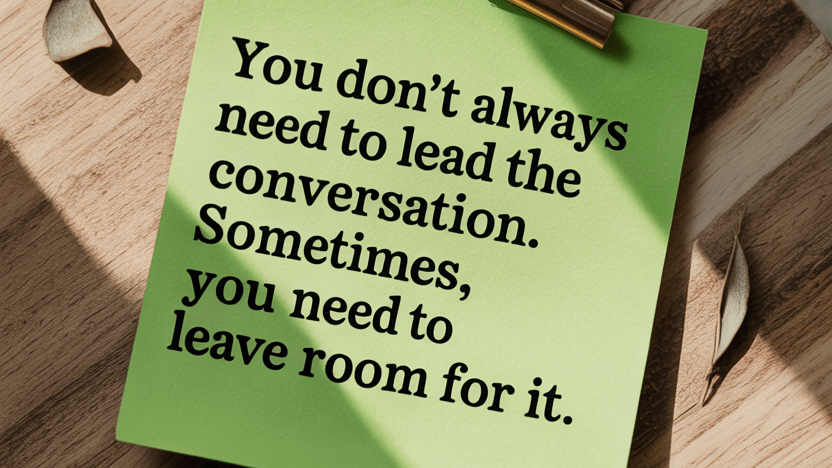
Why Great Leaders Know When to Stay Silent
Silence is one of the most overlooked tools in leadership. In a world that often rewards quick thinking and constant communication, choosing to pause can feel counterintuitive, but it’s a powerful way to create space for others to step in.
Used intentionally, silence builds trust, invites deeper thinking, and unlocks contributions that might otherwise go unheard.
Here are a few quick takeaways from this article:
🔹 Give space in meetings: After asking a question, pause for 5–8 seconds. It gives more reflective thinkers time to contribute.
🔹 In 1:1s, resist the urge to jump in: Some of the most powerful insights arrive after a moment of quiet.
🔹 Use silence to model trust: Let others know you believe in their ability to find the answer.
🔹 Practise silence yourself: Take a moment before big decisions to think more clearly.
Read on for practical insights and reflections on how silence can elevate your leadership.

If Someone in Your Team Is Having a Baby, Here’s What You Might Not Have Considered
Mothers leaving the workforce costs the UK economy £23 billion every year.
Not because they lack ambition, but because they don’t feel supported.
– 1 in 3 women don’t return to the same employer after maternity leave.
– 57% leave within two years.
– Replacing them can cost up to £50,000 and much more for senior roles.
I’ve spent over a decade supporting parents, first on the practical realities of life with a baby, and now as a back-to-work coach. I’ve seen just how pivotal this moment is emotionally and professionally.
And yet, it’s often treated as an admin process.
Here’s what many organisations miss and what thoughtful, targeted support can change.
 Eilish Saba Coaching